AI, Cheating, and the CV Paradox
There’s been so much talk about AI lately that I thought it was worth commenting on a couple of things I’ve seen recently.
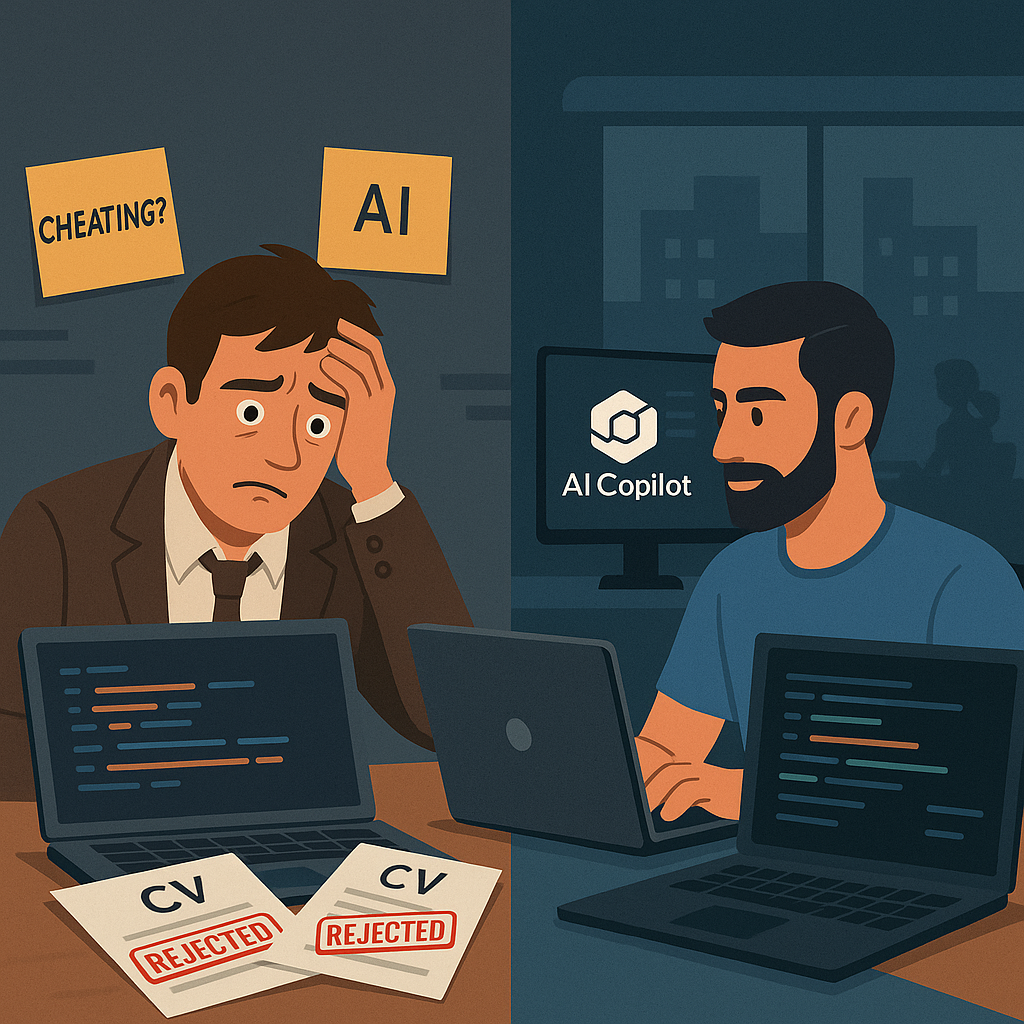
First, I came across a company that’s genuinely afraid of AI. Not because it might automate away their jobs or disrupt their industry, but because they believe developers will “cheat” by using ChatGPT or similar tools for any kind of takeaway coding assessment. As a result, they’ve decided that pre-screening is pointless because candidates might not be doing the work themselves. So they end up wasting hours interviewing people simply because their CVs look relevant.
Then, at the other end of the spectrum, there’s a SaaS company where one of their developers generated over 7,000 lines of code in just four hours, using AI tools effectively to boost productivity. Their biggest challenge? Not whether the work is real, but whether they have enough capable people to review the volume of output. For a tech company, that’s a game changer.
I still shake my head at the company scared of AI. In 2025, treating AI as some sort of cheat code completely misses the point. It is just another tool in a developer’s toolkit, like Git, Stack Overflow, VS Code or even Google. The skill is not in whether they use it, but how they use it. If AI can help them build faster, cleaner, or smarter, isn’t that the goal?
CVs, Authenticity, and the AI Stigma
I also recently came across a company whose website says they reserve the right to reject any CVs they believe have been influenced by AI. I’ll be honest, I don’t really understand this.
I absolutely agree that you should never lie on your CV. Exaggerating your achievements, inflating your title, or claiming experience you don’t have is not just dishonest, it will catch up with you.
But if you asked a friend to review your CV, or paid a CV writing “expert” to polish it, nobody would blink. So why is using AI, essentially a glorified editor and coach, suddenly unacceptable?
In my view, one of the most powerful and ethical ways candidates should be using AI is to refine how they tell their story. If you’re applying for a specific job, you can upload your CV and the job description to a tool like ChatGPT and simply ask: what am I not showing here that I should be?
That doesn’t mean fabricating experience. It means making sure the experience you already have is actually visible to the person reading it. For example:
-
You know you’ve worked in SaaS for five years, but does your CV actually say that?
-
You’ve led onboarding initiatives, but is it clear enough that a hiring manager or ATS will pick it up?
-
You’ve managed remote teams, scaled support ops, implemented success metrics, but is that lost in a bullet-point jungle?
Sometimes candidates leave out key context because they know it themselves, but forget that the recruiter, hiring manager or AI screening tool might not.
A Final Word: Don’t Lie, But Don’t Be Invisible
Studies suggest that anywhere between 30 and 55 percent of people admit to lying on their CVs, whether it is about job titles, dates of employment, or responsibilities. That’s not a trend to follow. The damage to your reputation and confidence isn’t worth the short-term gain.
So my advice?
Keep your CV honest, authentic and accurate to you. But also make sure it tells the story you want it to, that demonstrates your skills and experience. In a competitive job market, you don’t just want to be qualified. You want to be seen.